
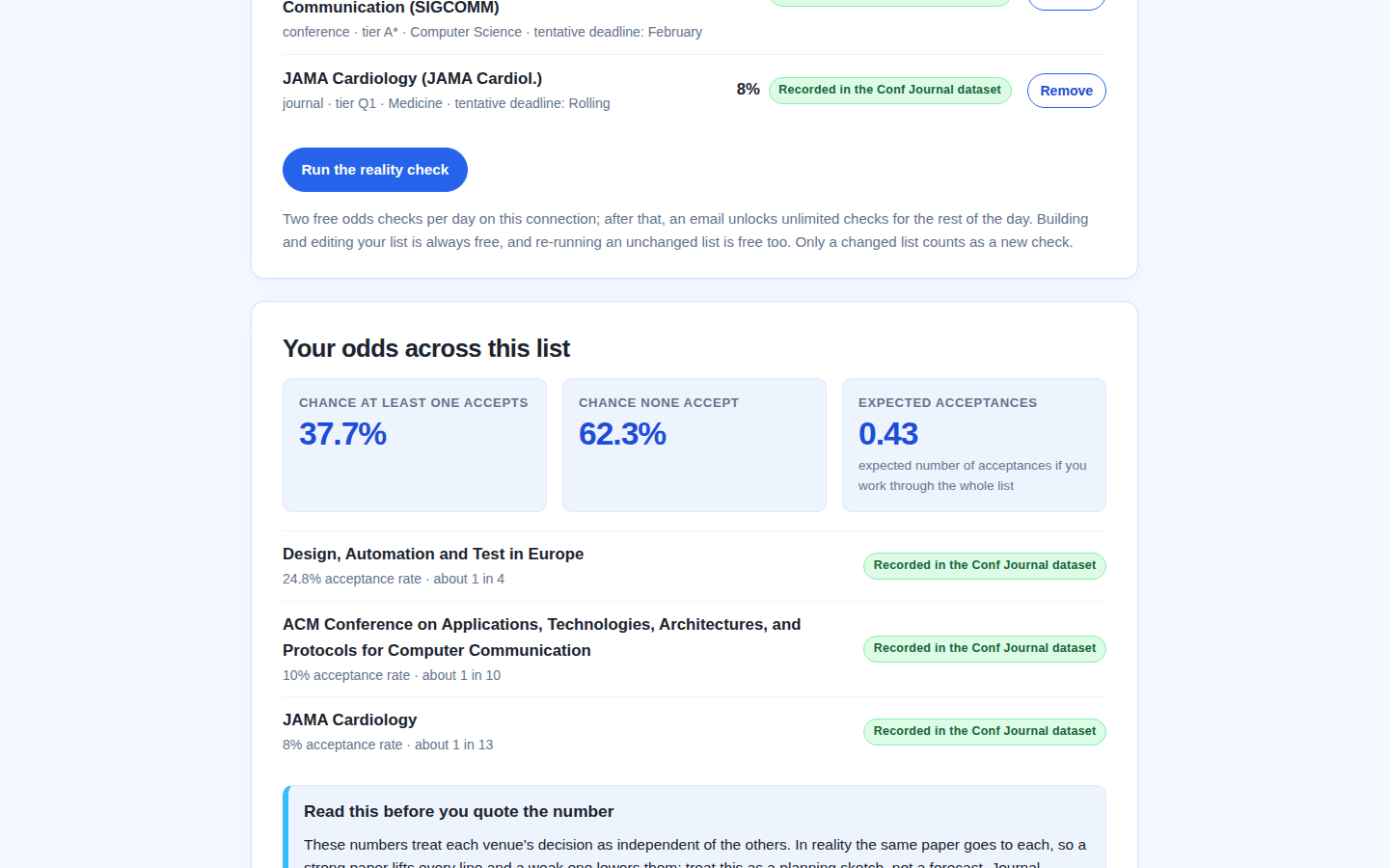
Here is a real list, run through Odds Reality Check with recorded rates only. DATE accepts at 24.8 percent, SIGCOMM at 10 percent, JAMA Cardiology at 8 percent. Judged one at a time, that reads as three rejections waiting to happen. Added up properly, the chance at least one accepts is 37.7 percent, the chance none do is 62.3 percent, and the expected number of acceptances across the list is 0.43. Six ways to read a list like this before you submit.
1. Stop judging one venue at a time
A paper is usually a campaign: this conference, then that journal, then the next. SIGCOMM at 10 percent, about 1 in 10, feels like a wall. Three venues together are a season with better than 1 in 3 odds of at least one yes. That is the whole point of the checker, and it is why our best conferences to publish a research paper guide is written as a list, not a single pick.
2. Put recorded rates first, estimates second
Only 8 of the 329 venues in the directory carry a recorded acceptance rate; the rest take your estimate, badged as an estimate. Build the spine of a list from recorded venues where you can, then be brutally honest with the estimates. A fantasy number in, a fantasy number out. The badge exists so you always know which kind of number you are reading.
3. Read the "none accept" number as the plan
62.3 percent is the outcome to plan around: what happens to the paper, the timeline, and the next deadline if the whole list says no. If that plan is "wait a year", the list is too short or too top-heavy. The month by month deadline guide helps you find the next realistic stop instead of a dead end.
4. Use expected acceptances to size the season
0.43 expected acceptances means this three-venue list is not yet a full season for most people. Add venues until the expected count approaches the number of papers you actually need placed, then stop. More is not always better: every venue costs a reformatted submission and a review cycle. Our venue matcher roundup covers tools that suggest where a paper fits.
5. Order the list by deadline, not prestige
The checker takes your list in the order you would try it, and deadlines rule that order. A venue you miss helps nobody: if you are tracking the icml 2027 submission deadline, build the list backwards from it. Recorded-rate venues with rolling deadlines, like JAMA Cardiology, slot in anywhere. Then check the CORE A* list by field before you decide a venue is beneath you.
6. Re-run when the list changes, not before
Editing and re-running an unchanged list is always free; a changed list is a new check, and two of those are free a day. So experiment in the builder first: drafts cost nothing. When the season plan settles, spend the check. It is the same discipline as the money side of a PhD: run the numbers before you commit, the way the SOP Outline Builder at SOPExpert structures a statement before you pay anyone to review it.
The tool itself has one more honest note printed on it: these numbers treat each venue's decision as independent, and the same paper goes to each, so read the result as a planning sketch, not a forecast. Fair enough. A sketch beats a guess: run your list through Odds Reality Check and read all three numbers.